Professional Private Tours
Private Tour of Delft
The famous Dutch city of Delft is renowned for its charming canals and the quaint old houses that reflect in them, but mention of its name immediately conjures up the unique blue and white china the city is so famous for – so much so that it has been dubbed the Faenza of Holland. The art of ceramic-making in Delft goes back many centuries: in the 17th century at least 30 factories were known to be in existence.


This art however had reached Holland much earlier when a group of Italian craftsmen settled in Holland at the beginning of the 16th century and opened up ceramic tile workshops. As soon as their businesses started to prosper, they took on Dutch names and founded schools to perpetuate their craft. Wall tiles and quaint ceramic stoves as well as tableware and decorative pieces were adorned with the famous Delft blue colouring.

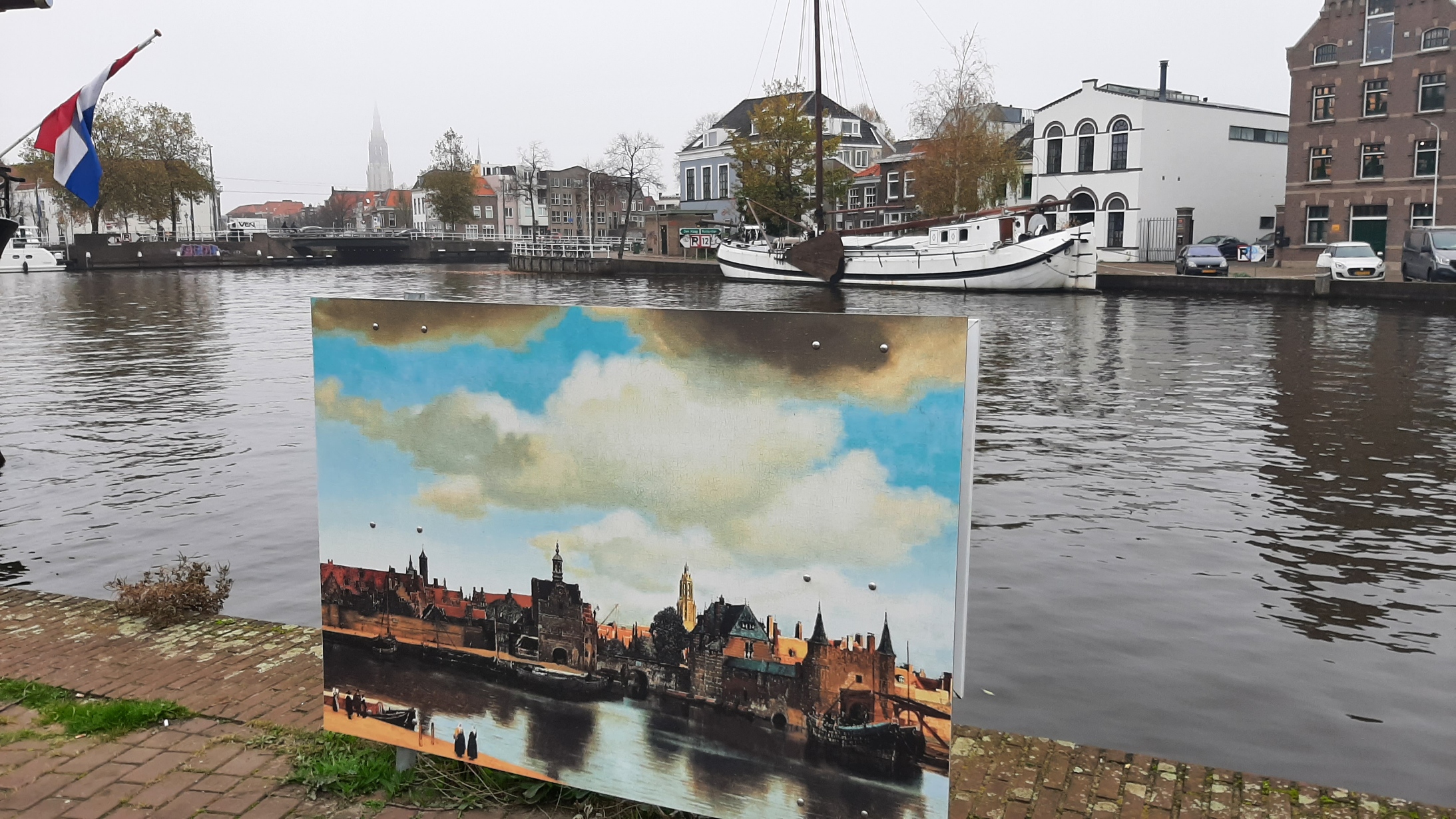
The period of greatest splendour was reached in the 18th Century, although in the late 1700s, when printed English porcelain had started competing with the hand painted Delft china, numerous factories were forced to close down. Then in 1876 two enterprising businessmen revived the declining china industry by setting up a factory (thereafter known as the Royal Delft Blue Factory) on a mass production basis. Delft is also the birthplace of two great men: Hugo de Groote (or Hugo Grotius) who was well-known as a jurist, diplomat, philosopher, and poet, and Jan Vermeer whose paintings perfectly reflect the city’s peaceful charm..
The center of the city is the marketplace, known as the Markt, which also serves as a delightful setting for summer carillon concerts. On this square rises the Nieuwe Kerk, a Protestant church originally built of wood, but later rebuilt in stone between 1384 and 1496.

Alongside the church stands a lovely Gothic bell tower. 109 meters tall; the tower is rectangular at the base and octagonal at the top. The aisles of the church and the well-lit nave, set off by round columns, have wooden vaulting. Inside is the tomb of the father of the Dutch nation, William of Orange, known as William the Silent, who was the first President of the United Provinces of the Netherlands in the 16th century and leader in the struggle against Spanish domination. He was killed on July 10, 1584 by an assassin in the pay of the Duke of Alba. The monument, carved in Italian marble and Dinant stone, was executed by Hendrick de Keyser. At the feet of the reclining effigy figure is a sculpture of the prince’s faithful dog who let himself starve to death when his master died. Beneath the sarcophagus is an opening leading to the crypt which contains the remains of forty odd members of the Orange-Nassau dynasty.